


Fall Onboarding: Custom Welcome Kits for New Hires
Sep 1st 2026
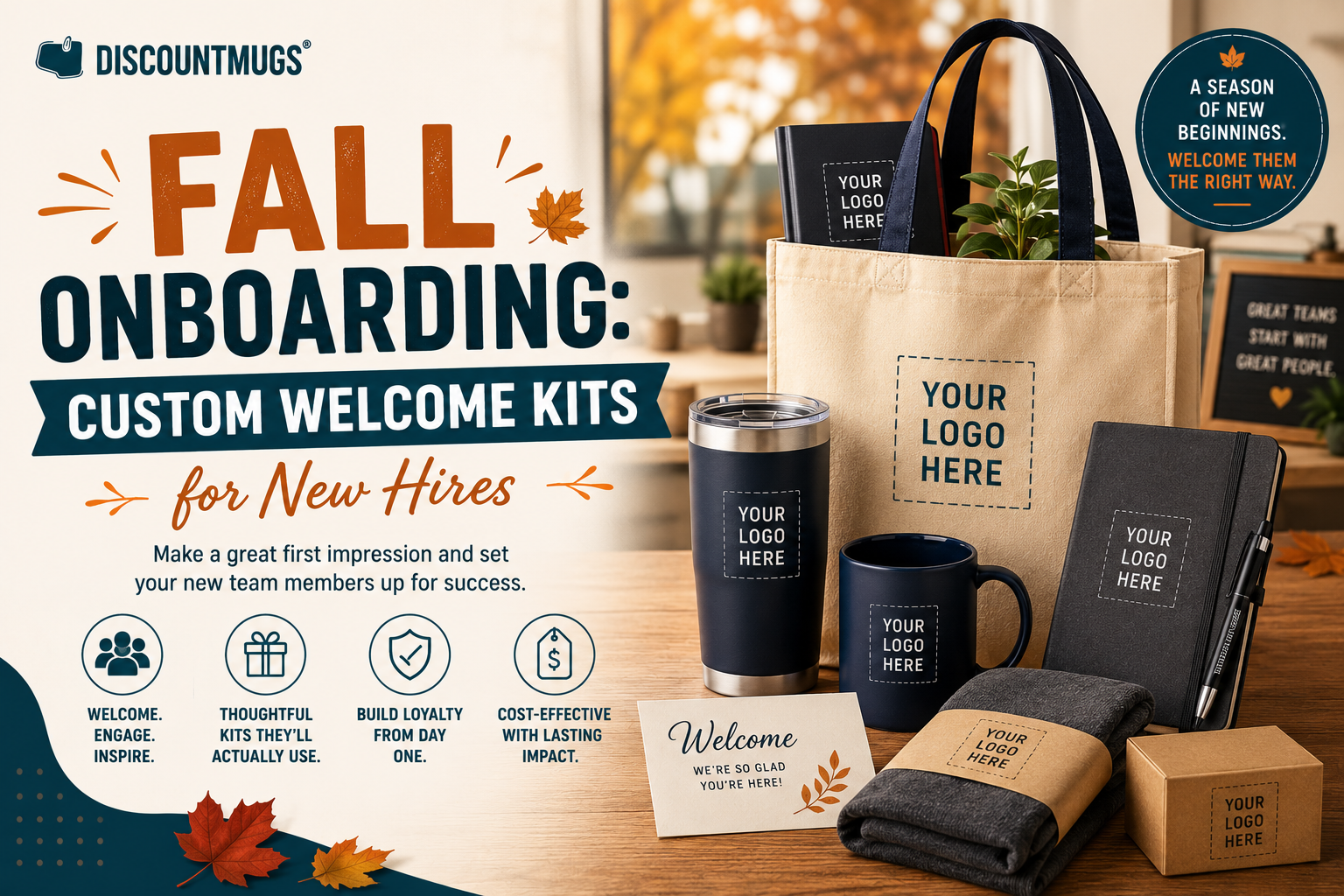
When a new hire joins in person, the company shows up for them: a desk that's ready, a team that introduces itself, a building that confirms they made the right call. When a new hire joins remotely, none of that happens automatically. The welcome kit is often the only physical thing the company will ever hand them — and it arrives before they've met a single colleague on video.
That single difference is why remote and hybrid onboarding demands more from a welcome kit, not less. A box that lands on a doorstep two days before someone's first Monday morning is doing real cultural work. Getting it right is worth the planning.
What Remote Onboarding Actually Needs from a Welcome Kit
In-office kits can afford to be a little impractical — there's a desk to put things on, a team to explain what things are for, and a building that provides context. Remote kits don't have any of that backup. Every item in the box needs to work on its own, in someone's home, from day one.
That means the test for each item isn't "does this represent the brand?" — it's "will this person actually reach for this in their daily routine?" The kits that earn their keep in a remote context tend to share a few traits: they're durable enough to last, practical enough to use immediately, and compact enough to ship without damage.
What to Include — and Why It Matters More for Remote Hires
An Insulated Travel Mug or Tumbler
The most reliable anchor for any remote welcome kit. A new hire working from home is making their own coffee every morning — a quality insulated tumbler or travel mug earns desk space immediately and stays there. For fall specifically, it keeps a hot drink hot through a video call that runs long — which is exactly the kind of daily-use moment that generates brand impressions long after the first week. Ships well, holds up through repeated use, and carries more perceived value than a standard ceramic mug.
A Tote Bag or Backpack
Remote employees still leave the house. A quality branded tote goes to the coffee shop, the coworking space, the errand run, and the occasional in-person meeting — generating public visibility that an item staying at a home desk never will. For a distributed hire, a bag is one of the few kit items that travels into the world and keeps working. It also doubles as the packaging for the rest of the kit, which makes the unboxing feel more intentional.
A Reusable Water Bottle
Remote work and proper hydration are a genuine pairing — no office kitchen to walk to means people forget to drink water more than they admit. A branded stainless steel or aluminum water bottle solves a real daily problem, which is exactly the condition under which promotional products earn long-term retention. It's also one of the cleanest items to ship — no breakage risk, no special packaging required.
A Notebook and Pen
Remote employees take notes during video calls, in their home office, and on the go. A branded notebook paired with a quality pen is the lowest-cost, highest-use addition to any kit — and it signals that someone thought about what the person actually does during their workday rather than just grabbing items that look good in a box.
A T-Shirt or Lightweight Apparel
Apparel does something specific for remote hires that other kit items don't: it makes the company visible to the people around them. A branded tee worn to a coffee shop, on a weekend errand, or in the background of a video call extends brand reach in a way that a desk item simply can't. For fall kits, a lightweight long-sleeve or quarter-zip earns more consistent wear than a summer tee. The quality threshold matters — a shirt someone likes wearing generates impressions; one they don't gets folded away.
A Welcome Note
This costs nothing and is the thing remote hires remember most. A short, specific note from the hiring manager — mentioning something real about why the person was hired — does cultural work that no branded item can replicate. Remote employees are starting a job without the ambient signals of a physical workplace confirming they belong. A personal note is one of the few things that closes that gap from day one.
The Logistics of Shipping Kits to Remote Employees
Getting the kit to a distributed team without a dedicated fulfillment operation is where most companies hit friction. A few approaches that work:
Bulk Order, Internal Assembly, Individual Ship
Order everything to a central location, assemble kits in-house, and ship to individual addresses as new hires join. More internal labor, better per-unit pricing, and full control over how the kit is packaged and presented. Works well for teams with a few dozen remote hires per year and someone who can own the assembly process.
Split Shipments Direct to Employees
DiscountMugs supports split shipments — products sent directly to multiple addresses rather than a single hub. This removes the internal assembly step for teams that don't have the bandwidth to manage it. Less control over presentation, but a much lighter operational lift at scale.
Staggered Ordering by Cohort
For companies with predictable hiring waves — a September cohort, an October cohort — ordering in batches for each group locks in volume pricing while keeping logistics manageable. Better than one-at-a-time ordering, and the production timeline is easier to plan around known start dates.
Timing: When to Order for Fall Hires
Remote kits need more lead time than in-office ones — shipping to individual addresses adds days, and a kit that arrives after someone's first day is worse than no kit at all. The practical rule: place your order three to four weeks before the earliest start date in your hiring wave. That window covers standard production (6–10 business days), artwork review and proof approval, and individual shipping without paying for expedited service.
For a fall cohort of October and November hires, that means ordering in September — which also happens to be when full-season bulk ordering gives you the best per-unit pricing and one consolidated artwork step instead of several.
Browse custom drinkware, bags and backpacks, and branded apparel to start building your remote welcome kits — or reach the team at 1-800-579-7152 to talk through the right combination for your team size and hiring timeline.
Frequently Asked Questions
What should I include in a welcome kit for a remote employee?
The most effective remote kits center on items with real daily use: an insulated tumbler or travel mug, a branded tote or backpack, a reusable water bottle, a notebook and pen, and a quality t-shirt or lightweight apparel piece. A short personal welcome note from the hiring manager rounds it out. For remote hires, practical beats decorative — every item should earn its place in their actual daily routine.
How do I ship welcome kits to employees in different locations?
Two approaches work well: bulk order to a central address, assemble internally, and ship individually — or use split shipments directly from DiscountMugs to multiple addresses. The first gives more control over presentation; the second removes the assembly step for teams that don't have bandwidth to manage it.
How far in advance should I order remote welcome kits?
Three to four weeks before the earliest start date in your hiring wave — enough time for production, artwork review, and individual shipping without rush fees. For a fall cohort, ordering in September covers October and November hires comfortably and locks in bulk pricing for the full season.
Can I get my logo on every item in the kit?
Yes. The Design Lab lets you upload your logo and preview it on each product before ordering. Having a vectorized logo file ready speeds up the artwork approval step — the single biggest source of timeline delays on first-time orders. The art team can review your file and advise on the cleanest reproduction method before production begins.
Do welcome kits actually help with remote employee retention?
They're one signal among many — but a meaningful one. For a remote hire, the welcome kit is often the first tangible evidence that the company was prepared for their arrival. Research consistently links structured onboarding with higher 90-day retention, and the kit is the physical component of that structure that a distributed employee experiences before anything else.