


The Fall Buyer's Guide to Branded Company Apparel
Aug 20th 2026
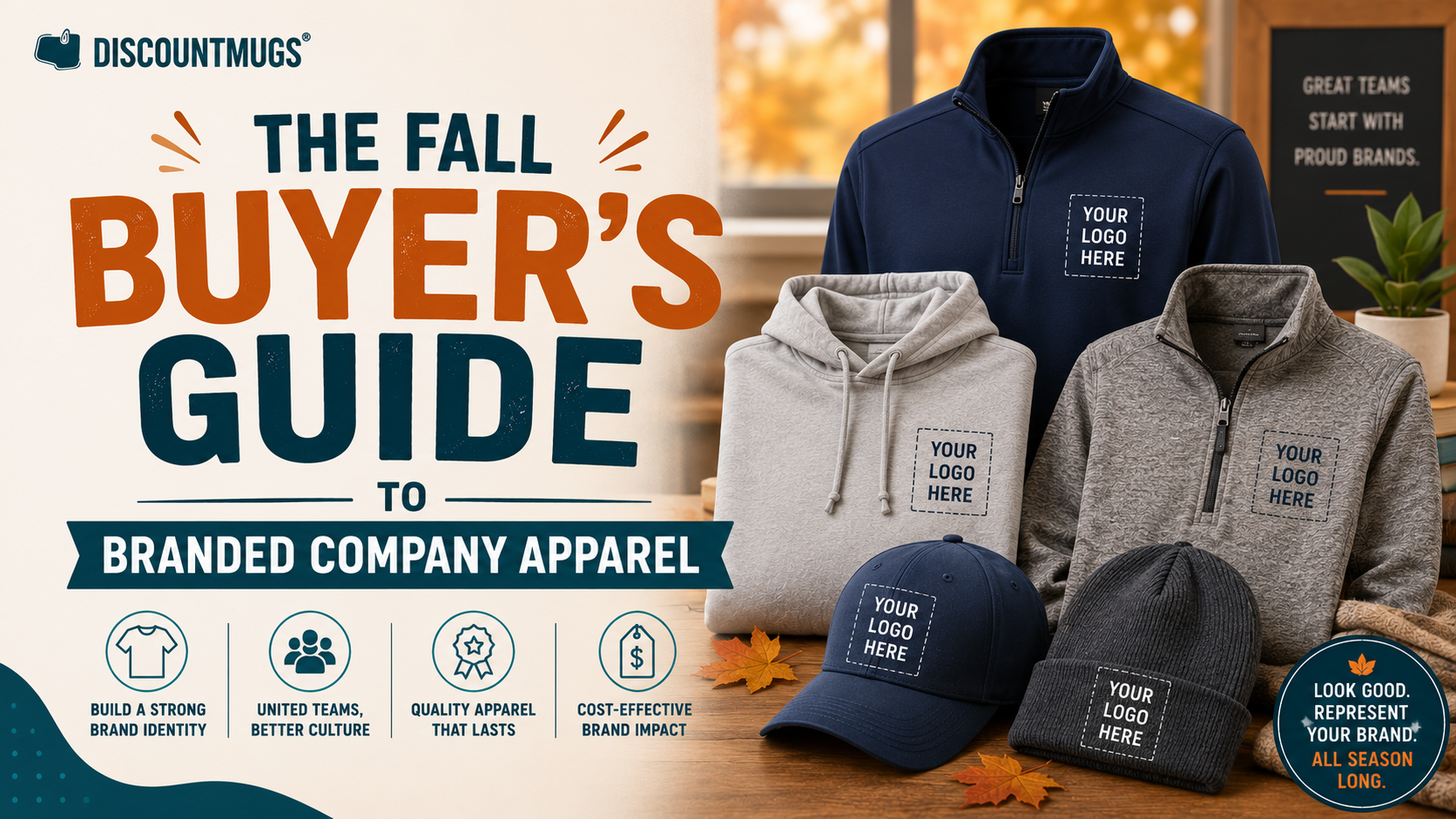
Apparel is the one branded category people choose to wear. A tote gets carried because it's useful, a mug gets used because it's on the desk, but a hoodie gets pulled on because someone actively decided to put your logo on their body that morning. That single difference is what makes company apparel the highest-recall, longest-lived item most organizations will ever print.
Fall is when that category comes into its own. The tees of summer give way to hoodies, quarter-zips, and beanies — and the buying calendar fills up fast: new hires who need something to wear to their first team event, Q4 client meetings, holiday party gear, trade shows that run through the cold months, and employee appreciation gifts that land better as a jacket than a keychain.
Why Apparel Outperforms Almost Everything Else You Could Print
If you need to make the case to whoever controls the budget, apparel has the strongest numbers of any promotional category — and it isn't close.
The 2026 ASI Global Ad Impressions Study measured how many brand impressions each product category generates over its usable life. Apparel dominates the top of that list. Outerwear — fleece, jackets, and sweatshirts — averages around 9,000 lifetime impressions, the most of any category measured, at a cost-per-impression under four-tenths of a cent. A branded T-shirt generates roughly 3,500 impressions at about a third of a cent each. A baseball cap lands near 4,000 impressions at three-tenths of a cent.
The reason outerwear wins is intuitive once you picture it: a jacket goes on top of everything else. Your logo isn't buried under a coat — it is the coat, seen on the commute, at the game, in line at the store, for years.
The retention data explains why those numbers get so high. In the ASI research, four in five consumers said they'd keep a promotional T-shirt for at least a year, and nine in ten said they'd wear it at least monthly. Hoodies and outerwear post the highest keep rates of any category. And the T-shirt was the single most requested promotional product in the 2026 study — 55% of consumers said they'd be excited to receive one, ahead of every other category.
Two more findings worth putting in front of a skeptic: nearly 80% of U.S. consumers who receive a promotional item say they view the advertiser more favorably afterward, and about three in four say they're more likely to do business with that brand. A hoodie your team actually wears is one of the lowest-cost, longest-running advertising placements available to you — and unlike a digital impression, the person wearing it chose to.
What Earns Its Budget in Fall
Fall apparel buying rewards choosing a few strong pieces over a rack of mediocre ones. Here's how the categories sort out for the season.
The Anchor: Outerwear
This is where fall apparel budgets should concentrate, and where the impression math pays off hardest.
- Hoodies and sweatshirts — the workhorse of fall branded apparel. Approachable, universally worn, and high on the keep-rate list. A logo hoodie becomes someone's default cold-morning layer, which is exactly why it racks up impressions.
- Quarter-zips and pullovers — the move when the audience skews more corporate. A branded quarter-zip reads polished enough for a client meeting and still gets grabbed on a chilly evening.
- Jackets and fleece — the premium end. Higher upfront cost, but the highest impression count of anything you can print. Best reserved for executive gifts, milestone recognition, or teams where the jacket represents a real recruiting or retention investment.
The Everyday Layer: Tees and Long Sleeves
The most-wanted category and the most versatile. A quality tee works for onboarding, team events, casual Fridays, and trade show staff. Long-sleeve versions extend it into the colder months. The quality threshold matters more than the count — a thin, scratchy shirt gets worn once; a good one enters the rotation.
The Finishing Piece: Headwear
Caps and beanies punch above their price. A cap generates close to 4,000 lifetime impressions at face level — the most visible logo placement there is — and beanies bring that into fall and winter. Low cost, high visibility, easy add-on to any apparel order.
The Corporate Signal: Polos
For uniforms, front-of-house staff, trade show teams, and client-facing roles, an embroidered polo does something the other pieces don't: it looks intentional. In the ASI research, polos posted the highest attractiveness score of any category — 67% of consumers keep one because they simply like how it looks.
Sizing: The Thing That Sinks Apparel Orders
Every category in this guide has one landmine that the others don't: fit. A mug fits everyone. A shirt that's too small is a negative-value item — it doesn't get worn, which means zero impressions and a quiet reminder that the company guessed wrong.
- Collect sizes rather than guessing. For new hires, fold it into pre-boarding paperwork. For existing teams, a quick form beats an educated guess every time.
- Order a size curve, not an average. Real teams aren't all medium. Build the order across the full range and add a few extras at the tails.
- Mind unisex vs. fitted cuts. Offering both, where the garment allows, dramatically improves how often the piece actually gets worn.
- Buy a small surplus. New hires, forgotten sizes, and the person who wants a second one are all cheaper to cover from a shelf than with a rush reorder.
If sizing genuinely can't be pinned down — a giveaway pile at a trade show, say — caps and beanies sidestep the problem entirely, which is one more reason they belong in a fall order.
Budgeting: A Planning Frame
- Essentials tier — roughly $12–20 per person. Screen-printed tee or a basic cap. Works for high-volume giveaways, event staff, and casual team gear.
- Standard tier — roughly $25–45 per person. Quality hoodie or embroidered polo, often paired with a tee or cap. The common configuration for team apparel and new-hire wearables.
- Premium tier — roughly $50–90+ per person. Embroidered quarter-zip, fleece, or jacket, sometimes as part of a multi-piece kit. Suited to executive gifts, milestone recognition, and client-facing teams.
A worked example: outfitting 50 team members in a standard-tier embroidered hoodie at around $35 each is a $1,750 order. Ordering all 50 at once moves you into a better volume tier and consolidates setup and artwork into a single step. Spread across the impressions a hoodie generates over its life, the cost-per-impression lands well under a cent — cheaper than nearly any digital placement, and worn by someone who chose to put it on.
What to Skip
- Guessed sizes. Named again because it's the number-one apparel mistake. Ask first.
- Low-quality blanks. Apparel gets judged the moment it's worn. A thin, poorly-fitting shirt becomes a garment nobody reaches for — and a quiet statement about how the brand sees quality.
- Over-branding. A giant logo across the whole chest makes a garment less likely to leave the house. A clean, well-placed mark travels much further than a loud one.
- The wrong decoration for the fabric. Embroidery on a lightweight performance tee, or a large screen print on heavily textured fleece, both look off. Match the method to the garment.
- One cut for everyone. A single unisex block cut leaves part of the team in something that doesn't fit right. Offer options where you can.
Getting Started
If you're looking at a fall calendar full of new hires, events, and gifting moments, the sequence is simple: pick your anchor piece, choose a decoration method that fits the garment and the audience, collect real sizes, and order it all in one go for the better volume break.
Customization consultants are available to help you scope the right pieces, choose between print and embroidery, sort a size curve, and confirm your artwork is set up correctly before anything is stitched or printed — at no additional cost to every customer.
Browse custom hoodies and sweatshirts, T-shirts, polos, and caps and beanies to start building your fall apparel — or head to all apparel for the full range.
Frequently Asked Questions
What's the best branded apparel for fall?
Hoodies and sweatshirts are the fall workhorse — high keep rates, universal wear, strong impression numbers. Quarter-zips suit more corporate audiences, caps and beanies add low-cost visibility, and jackets or fleece anchor premium gifting. Outerwear generates the most lifetime impressions of any promotional category.
Should I choose embroidery or screen printing?
Embroidery for durability and a premium look on polos, quarter-zips, jackets, and caps. Screen printing for bold, full-color graphics and larger tee runs. Most mixed orders use both, matched to each garment.
How much should I budget per person for branded apparel?
Most team apparel lands between $25 and $45 per person. Essentials-tier tees and caps run $12–20; premium embroidered outerwear runs $50–90 or more. Volume-based discounts apply, so consolidating a fall order improves per-unit cost.
What's the minimum order quantity?
Most items have a minimum order of 12, though it varies by product. For small teams that usually means ordering a modest surplus — useful anyway for new hires and reorders.
How do I handle sizing for a team order?
Collect actual sizes rather than estimating, order across a full size curve instead of an average, and offer unisex and fitted cuts where the garment allows. Buy a small surplus at the size extremes.
When should I place a fall apparel order?
Three to four weeks before you need it, and earlier for embroidered or multi-piece programs. Standard production runs 6–10 business days, plus artwork review, proof approval if required, and shipping.